Streamline Your Events: Modern Ticket Template Design
Organizing an event, whether it is a local workshop, a networking mixer, or a grand gala, involves juggling a thousand details. One of the most visible touchpoints for your attendees is the ticket. It is not just a receipt or an entry pass; it is the first physical or digital interaction they have with the event's atmosphere. A poorly designed ticket can undermine the perceived value of your event before it even begins. Conversely, a polished, well-structured ticket sets a professional tone instantly. This is where the utility of a high-quality Event Ticket Template Design becomes undeniable. It bridges the gap between a blank canvas and a finished, professional product without requiring you to spend hours wrestling with design software.
The Anatomy of a Professional Ticket
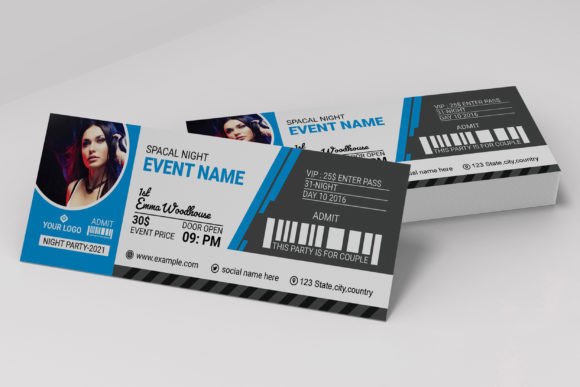
When we talk about a "beautiful, clean, modern" design, we are referring to more than just aesthetics; we are talking about functional clarity. The specific template we are exploring here—a standard 5.5" x 2" layout—adheres to industry standards, ensuring it fits standard ticket holders, lanyards, or raffle drums without awkward trimming. The visual personality of this design leans heavily into contemporary minimalism. It avoids clutter, which is a common pitfall in event marketing materials. Instead, it prioritizes visual hierarchy, ensuring that the event name, date, and time are immediately legible.
The "decorative" aspect does not mean ornate or distracting. In the context of modern typography, it suggests subtle embellishments or structural lines that guide the eye. This style is versatile enough for a sophisticated art exhibition yet structured enough for a corporate conference. Because the file is set up in CMYK color mode, you eliminate the guesswork involved in translating screen colors to ink. What you see on your monitor is a reliable predictor of the final print output, which is crucial for maintaining brand identity consistency across all your marketing materials.
Practical Applications Beyond the Event Door
While the primary function is obvious, the utility of a robust Event Ticket Template Design extends into various creative and commercial workflows. For small business owners and entrepreneurs, this template serves as a foundational design asset. It is not just about admitting people; it is about creating a cohesive ecosystem.
Consider these practical applications:
- Brand Consistency: Use the layout structure for VIP passes, backstage access, or sponsor badges. By maintaining the same grid and typography style, you reinforce your brand's visual language.
- Digital Adaptation: While the template is print-ready, its clean vector nature in Illustrator makes it easy to adapt for digital use. You can resize elements for social media event headers or email confirmation graphics without losing quality.
- Promotional Materials: The layout principles used in a ticket—balancing information density with white space—are excellent for designing flyers, postcards, or rack cards. You can extract the header design to create matching promotional flyers.
- Raffles and Fundraisers: Non-profits and community organizations often need raffle tickets. This format is perfect for that, allowing easy duplication and numbering.
Maximizing the "Easy Edit" Workflow
One of the most significant pain points in design is the "blank page syndrome." A template solves this, but a poorly constructed template creates a new problem: the "locked layer" headache. The value of this specific Event Ticket Template Design lies in its architecture. It is built for customization. You are not just moving pixels around; you are working with organized layers and editable vectors.
Here is how to approach the customization process to save time and ensure quality:
- Font Selection: The package includes links to free fonts. While these are chosen to complement the modern aesthetic, do not hesitate to swap them out if your brand uses a specific sans serif font or serif font. Ensure that any replacement font maintains the readability of the original at small sizes.
- Color Psychology: Start by applying your brand's primary color palette. However, be mindful of contrast. A dark background with light text works well for evening events (galas, parties), while light backgrounds with dark text are often better for daytime workshops or conferences.
- Information Hierarchy: Resist the urge to add too much text. The 5.5" x 2" space is limited. Stick to the essentials: Event Name, Date, Time, Location, and a Ticket Number or Barcode. If you need to include terms and conditions, use a smaller font size or a lighter font weight to differentiate it from the main details.
- Visual Balance: If you are adding a logo, ensure it does not overpower the text. Often, placing the logo in a corner or as a subtle watermark in the center works best. The goal is a clean, modern look, not a cluttered collage.
Ensuring Print-Ready Perfection
Even with the best template, the final output depends on your preparation. Since this file is in Illustrator format, you have the advantage of vector scalability. However, you must ensure that any images you insert (like a background texture or a high-res logo) are also high-resolution. For print, 300 DPI is the standard.
Before sending the file to the printer, double-check your bleeds. The template likely includes bleed lines (usually 0.125 inches), which ensure that no unprinted edges appear if the paper shifts slightly during cutting. Also, convert your text to outlines or ensure the printer has the fonts installed to avoid substitution errors. This attention to detail is what separates an amateur DIY project from a premium product.
Conclusion: Elevating the Attendee Experience
A ticket is a promise. It promises an experience, a memory, or a connection. By utilizing a well-crafted Event Ticket Template Design, you are respecting that promise. You are signaling to your attendees that you value quality and organization. Whether you are a graphic designer managing a client's launch, a marketer promoting a webinar, or a crafter organizing a community fair, this asset streamlines your workflow and elevates your output. It allows you to focus on the event itself, confident that the entry pass is already taken care of.